We use a couple of analytics cookies to see which guides and spots people actually use, so we can make the site better. Nothing creepy, and you can say no anytime.
Asian Side vs European Side: The Decision That Shapes Your Istanbul Life
Every nomad faces this choice. After surveying 50+ community members, here's the honest breakdown of what each side actually feels like to live and work on.
Within 48 hours of joining our Telegram group, most newcomers ask the same thing: "Should I live on the Asian side or the European side?"
It isn't a trivial question. The Bosphorus isn't just a body of water - it's a lifestyle divider. The two sides of Istanbul have different rhythms, different price points, and different communities. Your choice shapes your daily life more than almost any other decision.
We surveyed 50+ community members who have lived on both sides. Here's what they said.
The quick answer
Asian side (Kadikoy/Moda): Choose this if you want a calm daily routine, walkable streets, lower rent, good cafes, and the ferry commute as a daily ritual. Most of our community lives here.
European side (Cihangir/Besiktas/Karakoy): Choose this if you want nightlife, social density, historic sites, and the feeling of being "in the center." Higher rent but more energy.
The data from our survey
We asked 53 community members who had been in Istanbul for at least 2 months. Here's what they reported:
Question
Asian side (%)
European side (%)
Where do you live?
62%
38%
Where do you work most days?
48%
52%
Where do you socialize most?
35%
65%
Which side has better cafes for work?
55%
45%
Which side would you recommend to newcomers?
58%
42%
The pattern: Most nomads live on the Asian side but cross to the European side for social events. The Asian side wins on livability. The European side wins on energy.
Asian side: the case for Kadikoy and Moda
What it feels like
Kadikoy feels like a small city within Istanbul. You can walk everywhere. The streets are lined with independent cafes, bookshops, vinyl stores, and family-run restaurants. The fish market is packed every day. Cats are everywhere.
Moda, the peninsula neighborhood next to Kadikoy, adds a seaside promenade and a quieter residential feel. It's a 15-minute walk from Kadikoy center but feels like a different town.
Nightlife is limited. Kadikoy has bars but nothing like Beyoglu's scene. If you want to go out late, you're taking a late-night taxi home. For the full nightlife breakdown, see our entertainment and leisure guide.
The ferry stops at ~10:30 PM. If you're on the European side for dinner, you need to plan your return. The Marmaray train runs later but the vibe isn't the same.
It can feel isolated. If all your friends live in Cihangir, crossing the Bosphorus every time you socialize gets tiring.
European side: the case for Cihangir, Besiktas, and Karakoy
What it feels like
Cihangir is a bohemian hilltop neighborhood with Bosphorus views from almost every cafe. The streets are steep, the buildings are old, and the energy is creative. It attracts artists, writers, filmmakers, and nomads who want to feel like they're in the middle of something.
Besiktas has a different energy - more local, more market-oriented, more working-class despite being central. Karakoy/Galata is the trendy gallery and coffee district near the waterfront.
The daily rhythm
A typical workday on the European side:
9:00 AM: Walk to Federal Coffee in Cihangir or Kronotrop in Karakoy. 5-15 minutes depending on the hills.
1:00 PM: Lunch options everywhere. More variety than the Asian side, especially for international food.
6:00 PM: Walk down to Karakoy waterfront. Watch the fishing boats on the Galata Bridge.
8:00 PM: Dinner in Beyoglu. Cocktails in one of the rooftop bars. The European side comes alive at night.
11:00 PM: Walk home (if in Cihangir) or taxi (~100 TL within the area).
The numbers
Expense
Cihangir area
Furnished 1BR
20,000-40,000 TL ($444-889)
Coworking (Kolektif House)
490-950 TL/month ($11-21)
Daily food (cooking + eating out)
250-400 TL ($5.56-8.89)
Commute (everything is walkable)
~0 TL
The honest downsides
Rent is 30-50% higher than the Asian side for comparable apartments.
Tourist crowds. Taksim, Istiklal Caddesi, and the Grand Bazaar area get extremely crowded, especially on weekends.
Noise. The European side is louder. Narrow streets, bars, construction, and general urban density mean lighter sleep.
Less "neighborhood" feel. Cihangir has community, but Karakoy and Beyoglu can feel transient - lots of tourists, fewer regulars.
The cross-Bosphorus lifestyle
Here's what nobody tells you: many nomads don't pick a side. They build a week that uses both.
The most common pattern in our community:
Live on the Asian side (cheaper, calmer, better daily routine)
Work 2-3 days on the Asian side (MOB, cafes)
Work 1-2 days on the European side (Kolektif House, Karakoy cafes)
Socialize on the European side (meetups, dinners, bars)
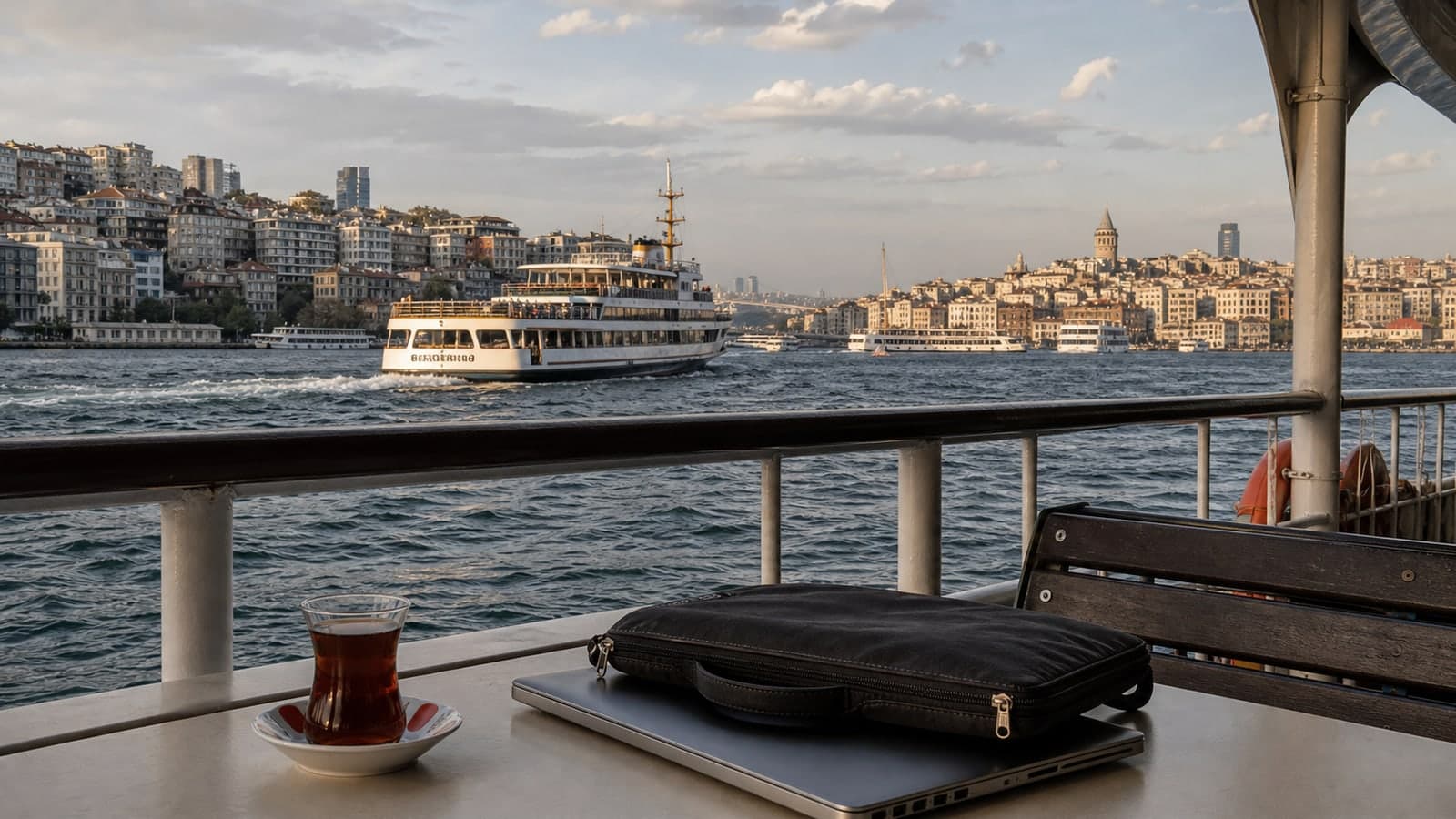
Take the ferry between sides (20 minutes, ~60 TL / ~$1.33, beautiful)
This pattern gives you the best of both: affordable living, daily calm, social variety, and the ferry commute that everyone falls in love with.
The decision framework
Choose the Asian side if:
You want the lowest monthly cost
You prefer quiet evenings and early mornings
You work best in neighborhood cafes with regulars
You enjoy cooking at home and shopping at local markets
You see the ferry commute as a feature, not a cost
Choose the European side if:
You prioritize nightlife and spontaneous social plans
You want to walk everywhere without ferry schedules
You prefer a denser, more cosmopolitan energy
You don't mind paying more for location
You plan to explore historic sites frequently
Choose both if:
You want the community's most popular pattern
You're comfortable with a 20-minute ferry commute 2-3 times a week
You want affordable rent AND social access
You're staying 3+ months and have time to build routines on both sides
What our community chose
When we asked the 53 surveyed members "If you had to start over, which side would you choose?"
Asian side: 56%
European side: 32%
Would alternate between both: 12%
The Asian side wins not because it's objectively better, but because the combination of lower cost, better daily rhythm, and the ferry commute creates a lifestyle that most nomads find hard to beat.
Read the full neighborhoods guide for detailed breakdowns of each area, or ask the community for current recommendations based on your specific priorities.